|
|
|
|
|
|
|
|
|
Eric Winkle Brown Signed Naval Art
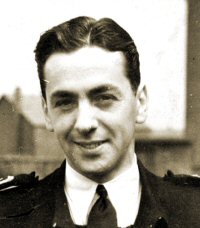
Eric Winkle Brown
Most highly decorated Royal Navy pilot. Holder of the world record for most types of aircraft flown, at 487, and for the largest number of aircraft carrier landings - 2407. Had a 31 -year career in the Royal Navy, and is the Fleet Air Arm's most decorated pilot. After a distinguished operational tour flying from Britain's first escort carrier, he was selected as a test pilot in 1942 and then served at A&AEE Boscombe Down before being appointed as Chief Naval Test Pilot at the Royal Aircraft Establishment at Farnborough, where he remained for six years. During that time he commanded the Enemy Aircraft Flight, the High Speed Flight and finally the prestigious Aerodynamics Flight. During the Korean War he served as a test pilot at the US Naval Air Test Center at Patuxent River for two years. While in his appointment as Head of the British Naval Air Mission to Germany from 1957-60 he was seconded to the Focke-Wulf Co. for a spell as their test pilot. In his test-flying career he has flown a world record 487 basic types of aircraft, and made a world record 2,407 aircraft carrier landings in fixed-wing aircraft. He is a past President of the Royal Aeronautical Society, an Honorary Fellow of the Society of Experimental Test Pilots and a Master Pilot of Russia. In 1995 he was inducted into the US Navy's Carrier Aviation Test Pilot Hall of Honor, the only non-American to have received this accolade. Eric Winkle Brown died on 21st February 2016.
| Eric Winkle Brown - Signed Naval Art Naval Crew Signatures |
|
|
|
|
|
|
|
|
|
|
|
|
|
|
|
|
|
|
|
| Text for the above items : |
Red Section Scramble by Ivan Berryman. 609 Sqn Hawker Typhoons are shown taking off from Manson in Kent in February 1943. Nearest aircraft, R7872 (PR-S) is that of Sgt John Johnny Wiseman, the other, DN294 (PR-O) being the mount of Fl Sgt Alan Babe Haddon. Both aircraft were tragically lost during an action on 14th February, the pair being taken by surprise by Focke-Wulf 190s over the Channel, Wiseman losing his life in the incident. |
Saro SR.A1 Over the Needles by Ivan Berryman. In 1947, the first of three SR.A1 experimental flying boat fighters took to the air from the Saunders Roe factory at Cowes. Powered by two Metropolitan-Vickers F2 / 4 Beryl turbojet engines, this unique and innovative machine displayed excellent performance, providing the pilot with an ejection seat and fully pressurised cockpit. Sadly, service chiefs concluded that land-based fighters were the way forward and no further examples of the SR.A1 were built. |
The Long Patrol by Ivan Berryman. When the RAF took delivery of their first Consolidated B.24 Liberators in 1941, aerial cover for trans-Atlantic convoys was strengthened, affording these brave merchant ships a modicum of protection as they forged their slow passage from the US to Britain with vital supplies. 120 Sqn was immediately pressed into this role from their initial base at Nutts Corner in Northern Ireland, before moving to Ballykelly and Reykjavik in Iceland as the U-Boat threat increased. The example shown is a Liberator V of RAF Coastal Command. |
Bristol Beaufort by Ivan Berryman. A Bristol Beaufort Mk I of No 22 Squadron attacks a railway marshalling yard during raids on the French coast in the Autumn of 1940. |
Saro Sr.53 by Ivan Berryman. A Ministry of Supply contract issued in the mid 1950s resulted in the unique Saro SR.53 supersonic interceptor fighter, which incorporated a mixed powerplant consisting of an Armstrong Siddeley Viper turbojet mounted above a liquid-propellant de Havilland Spectre rocket motor. First flown in 1957, the aircraft displayed good characteristics, but was ultimately not put into production. |
Valley Forge Fly-By by Ivan Berryman. Lieutenant Robert C Wattenburger shows off the unique lines of the Vought F.4U Corsair 124723 (NP-8) of VC-3 during a low-level fly-by of USS Valley Forge in May, 1952. |
Fly Past by Randall Wilson. Hawker Sea Furies buzz the stern of HMAS Sydney during fleet exercises off Jervis Bay 1956. |
A DSO for Cheshire by Ivan Berryman. On the night of 12th/13th November 1940, Whitley V P5005 found itself slightly off course above the primary target due to problems with the intercom. Changing instead to a secondary target, some railway marshalling yards near Cologne, Pilot Officer Leonard Cheshire suddenly felt his aircraft rocked by a series of violent explosions that caused a severe fire to break out in the fuselage, filling the cockpit with acrid black smoke. As DY-N plunged some 2,000 feet, Cheshire managed to regain control and the fire was eventually extinguished. For bringing his aircraft safely home to 102 Squadron's base after being airborne for eight and half hours, Cheshire was awarded a DSO. |
Moskito-Jager by Iain Wyllie. An Me262B-1a of 10/NJG.11 Kommando Welter climbs to operational altitude to begin an anti-Mosquito patrol in March 1945. The Royal Navy's best test pilot, Captain Eric Brown, chief naval test pilot and commanding officer of the Captured Enemy Aircraft Flight Royal Aircraft Establishment, who tested the Me 262 noted: This was a Blitzkrieg aircraft. You whack in at your bomber. It was never meant to be a dogfighter, it was meant to be a destroyer of bombers... The great problem with it was it did not have dive brakes. For example, if you want to fight and destroy a B-17, you come in on a dive. The 30mm cannon were not so accurate beyond 600 metres. So you normally came in at 600 yards and would open fire on your B-17. And your closing speed was still high and since you had to break away at 200 meters to avoid a collision, you only had two seconds firing time. Now, in two seconds, you can't sight. You can fire randomly and hope for the best. If you want to sight and fire, you need to double that time to four seconds. And with dive brakes, you could have done that. |
Legend - TSR.2 by Ivan Berryman. Viewed by many as the most advanced and forward-thinking design for an attack and reconnaissance aircraft in its day, the BAC TSR.2 was to fall victim to inter government wrangling and the absurd belief by those in power in the mid 1960's that the days of the manned fighter aircraft were over and that all future conflicts would be fought with missiles. Eventually exploring tried and tested American aircraft to re-equip the RAF, the extraordinary TSR.2 project was abandoned, leaving the British military aviation industry bruised, angry and in tatters. No all-British military aircraft has been conceived or constructed since and it is almost certain that this remarkable aircraft would have continued in front line service for at least two decades had it been allowed beyond its difficult gestation. |
Tribute to the Blenheim Crews by Ivan Berryman. Blenheim IVs of No 21 Squadron, here being attacked by Adolf Gallands Bf 109 on 21st June 1940. Galland claimed two Blenheims and a Spitfire that day before he, too, was shot down by the defending Spitfires of 303 Sqn. |
Fairey Firefly F Mk.Is of 1770 Sqn, 1945 by Ivan Berryman. Two Fairey Firefly F Mk1s of 1770 NAS embarked on HMS Indefatigable are shown outbound on Operation Meridian I on 24th January 1945. The nearest aircraft is DT947, flown by Vin Redding. Operation Meridian was a series of two air attacks on Japanese-held oil refineries at Palembang on Sumatra. The huge aviation fuel output of these refineries was reduced to only a quarter of their output after the two raids on the 24th and 29th January 1945. |
Up and Over by Randall Wilson. Westland Wyverns go vertical over HMS Eagle during the Suez Crisis of 1956 |
Fairey Battle, 218 Squadron by Ivan Berryman. A Fairey Battle of No.218 Squadron gets on the tail of a Ju-87 Stuka over France in 1940. An aircraft carrying the codes HA-J was shot down by flak on the afternoon of 12th May 1940. The three crew of aircraft K9353, J B Horner, L C Flisher and L D Davies were all lost. |
Clipped Signature - Eric 'Winkle' Brown. A record breaking test pilot, he holds the world record for most types of aircraft flown, most carrier landings and is the most decorated pilot of the Fleet Air Arm. A legend in aviation, he has written several biographies of his life and career. He died in 2016. |
Supreme Courage by Philip West. Skuas flew from HMS Ark Royal through much of the 1940 campaign off Norway, and one is seen getting airborne in typically grey North Sea weather. The Blackburn Skua had many remarkable firsts to its credit; the first all-metal monoplane built for the Fleet Air Arm (FAA); the first dive bomber in British air services; the first enemy aircraft shot down in WW2 fell to a Skua; the first fighter ace in the FAA (Lt. Bill Lucy DSO) flew Skuas and the first warship (Konigsberg) destroyed by dive bombing was sunk by Skuas. |
Night of Defiance by Ivan Berryman. Boulton Paul Defiant of 151 Sqn, based at Wittering, attacking a Messerschmitt Me110. Following an exhausting summer during the Battle of Britain, 151 was designated a night fighter squadron and was equipped both with Hurricanes and Defiants. On the night of 15th January 1942, two Defiants succeeded in bringing down three German aircraft and further successes were recorded during enemy raids on Birmingham when a further nine kills were claimed. |
Avenger's Return by Ivan Berryman. On 24th January 1945, whilst taking part in Operation Meridian, S/Lt Arthur Page's Grumman Avenger JZ469 of 849 NAS suffered an electrical fire whilst climbing toward the target in formation and the decision was made to abort the mission and make an emergency landing back on HMS Victorious. Page's aircraft is shown here moments before touchdown under the watchful eye of the Landing Signals Officer. |
No Room for Error by Philip West. Capt Eric (Winkle) Brown launches his Seafire TM379, from the deck of the trials carrier HMS Pretoria Castle in July 1945. Unlike other carriers, those used for trials, usually had their decks clear of other aircraft. On this day, once the aircraft is launched the carriers crew streamed onto the deck to check the surface and clear anything that may obstruct a landing. TM379, was the first prototype, Seafire Mk 45 and was fitted with a Rotol contra prop, modified fin, rudder and tail hook. |
|
Contact Details |
|
Sign Up To Our Newsletter!
This website is owned by Cranston Fine Arts. Torwood House, Torwoodhill Road, Rhu, Helensburgh, Scotland, G848LE Contact: Tel: (+44) (0) 1436 820269. Email: cranstonorders -at- outlook.com
|
 |




