|
|
|
|
|
|
|
|
|
First Lieutenant John Skara Signed Naval Art
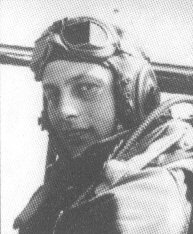
First Lieutenant John Skara
John Skara joined the service in June 1942. After training he was posted to England to join the 357th Fighter Group at Leiston in Suffolk, flying both the P51B and later the P51D. He undertook his first combat mission in March 1944, and took part in the long and hazardous escort missions both to Russia, and to Italy. For most of his combat tour he flew as wingman to Bud Anderson
| First Lieutenant John Skara - Signed Naval Art Naval Crew Signatures |
|
|
|
|
| Text for the above items : |
Opening Sky by Robert Taylor. With the morning sun glinting on their fuselages, P-51 Mustangs of the 78th Fighter Group cross the Dutch coastline far below, as they head back towards their base at Duxford, England at the end of a long sweep east of the Rhine crossing, Spring 1945. The final months of the war in Europe lie ahead, and for the P-51 pilots victory is within sight. Finally, after years of toil, the sky was theirs. |
Air Superiority by Robert Taylor. It had taken almost six years of continual air fighting for the Allied forces to attain complete and total air superiority over the Luftwaffe. At the outbreak of World War II the mighty German Air Force had appeared invincible but the ensuing Battle of Britain gave the Luftwaffe its first taste of what was to come. When America joined the war, bringing with her to Europe new types of fighters and bombers, the writing must have been clearly chalked on the wall of Hitler's bunker. Unleashing the full power of the Eighth Air Force against the Third Reich by day, and with the RAF Bomber Command's constant attacks by night, production in Germany's aircraft and munitions factories became fatally depleted. In the air the Allied fighter pilots were beginning to dominate the skies, and by the spring of 1945, had achieved complete air superiority. It had been a long and bitter struggle, fought with great courage and sacrifice. |
Warm Winter's Welcome by Nicolas Trudgian. As the Autumn of 1944 turned to winter, the USAAF Eighth Air Force bombers were penetrating ever deeper into enemy territory, attacking distant targets in central and south-east Germany. Large formations of seven or eight hundred bombers, escorted by as many fighters, darkened the skies over the Reich. Central to the massive daylight raids was the long-range capabilities of the P-51 Mustang, the most versatile fighter of the war. Despite incessant pounding from the air, the Luftwaffe were putting up determined resistance, particularly in the south, often sending up several hundred fighters to meet the challenge. Huge aerial battles were fought between the opposing groups of fighters, and though the Allied pilots usually gained the upper hand in these encounters, the air fighting was prolonged and furious. Typical of those encounters, on a single mission in November the Allied estimate of Luftwaffe sorties flown against them exceeded 750, but often the German fighters were handicapped by poor direction from the ground, hampering their effectiveness - on the 27th, several Gruppen were vectored directly towards the P-51s of the 357th and 353rd Groups believing them to be in-coming bombers. They paid the price, the Leiston based pilots of the 357th bagging 30 enemy fighters before they knew what hit them. Successful as they were, the long-range escort missions flown by the P-51s were both hazardous and grueling. The weather, particularly in winter, was often appalling, and even an experienced pilot could become disoriented after hectic combat, and lost in the far reaches of the Reich. The return to base in England after combat over distant enemy territory was always exhilarating, and the pilots often hedgehopped gleefully over towns and villages on their way home after crossing the English coast. Nicolas Trudgians painting depicts such a scene, with P-51 Mustangs of the 357th Fighter Group racing over a typical English village as they head for Leiston and home. As the evening light fades, the peace and tranquillity of the snowy village, broken momentarily by the roar of Merlin engines, seems to bid the returning fighter boys a warm winters welcome. Published 2000. Signed by four P-51 Mustang pilots who flew with the 357th Fighter Group in combat during World War II. |
Heading Home to Raydon by Robert Taylor. After a grueling bomber escort mission late in WWII, P-51 Mustangs of the 353rd Fighter Group return to their base at Raydon, Suffolk. |
|
Contact Details |
|
Sign Up To Our Newsletter!
This website is owned by Cranston Fine Arts. Torwood House, Torwoodhill Road, Rhu, Helensburgh, Scotland, G848LE Contact: Tel: (+44) (0) 1436 820269. Email: cranstonorders -at- outlook.com
|
 |




