|
|
|
|
|
|
|
|
|
Flight Lieutenant Peter Hairs MBE Signed Naval Art
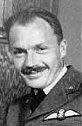
Flight Lieutenant Peter Hairs MBE
Peter Hairs joined the RAFVR in 1937, and was called up at the outbreak of war in September 1939 to complete his training. After being commissioned he converted to Hurricanes, joining 501 Squadron at Tangmere in January 1940. He went to France with the squadron in May, claiming a share in a Dornier Do17 a few days after arriving. 501 covered the evacuation of the BEF from Cherbourg before re-assembling in England. On the 3 June he was shot down, but fortunately not seriously hurt and two days later he rejoined the squadron at Le Mans. On the 5th of September he downed an Me109, Peter Hairs was posted to 15 FTS, Kidlington on October 13 1940 as an instructor. He went to 2 CFS, Cranwell for an instructors course on February 23 1941. after which he taught at 11 FTS, Shawbury and 10 EFTS, Weston-Super-Mare before being posted to Canada in June as a EFTS flying instructor and then assistant CFI (EFTS). In December 1943 he was posted to join 276 Squadron to 19 OTU. He finished the was in India, receiving a mention in dispatches. He died in 2014.
| Flight Lieutenant Peter Hairs MBE - Signed Naval Art Naval Crew Signatures |
|
|
|
|
|
| Text for the above items : |
Vital Force by Richard Taylor. For perhaps the sixth time today, profoundly outnumbered, the RAFs young fighter pilots will intercept yet another Luftwaffe force as the evil raiders invade their beloved airspace. It is August 1940, and the Battle of Britain is raging towards its ferocious climax over southern England. The sturdy Hawker Hurricane MkIs, bearing the brunt of all the combat flying during the Battle, will account for no fewer than four fifths of the air victories achieved by RAF fighter pilots. The simplicity of its construction enabled the Hurricane to survive heavy punishment in combat, at the same time providing its pilots with a reliable and stable gun platform. Beautiful, distinctive, tough and aggressive, this remarkable fighter, together with its courageous young pilots, earned the undying gratitude of a nation on the verge of defeat and ultimately, an unrivalled position in the annals of air warfare. |
Battle Attack by David Pritchard Morning of the 24th may 1940. Although heavily damaged by ground fire, the hopelessly out-classed and poorly armed, Fairy Battles of 12 Squadron, led by F/O David E Garland, gallantly press home their attack on the bridges at Maastricht, while above, Hurricanes of no 1 squadron are embroiled in a desperate dogfight to keep at bay attacking BF109's flown by the highly experienced and battle hardened pilots of 2/JG27. |
Glorious Summer by Robert Taylor Throughout the long hot summer of 1940 the destiny of the British Isles, indeed the future of Europe, lay in the hands of a small band of young RAF fighter pilots. Against them stood the vast aerial fleets of an all-powerful Luftwaffe, gloating and confident from its victories in Poland, France and the Low Countries. Lying in wait across the Channel, anticipating an easy victory by its air force, were the armies of the most powerful tyrant the world had ever known. With Europe already succumbed to Nazi rule, Britain was alone, the last bastion among the free nations to stand against an evil empire bent upon world domination. The battle, the first ever to be fought entirely in the air, would change the course of history, whatever the outcome. Outnumbered more than five to one at the outset, the odds were so heavily stacked against the RAF, the task looked hopeless. But as the ferocious aerial battles continued through the long summer months, the tactical skills, devotion and raw courage of the RAF's young flyers, gradually turned the tide. By September end, the battle was won and the defeated Luftwaffe retired to its plundered territories to lick its wounds. Image shows nearest, young Pilot Officer Geoffrey Page, later to become one of the RAFs most highly decorated fighter aces, powers his Mk I Hurricane over the country lane at the edge of the airfield, as he and his fellow No 56 Squadron pilots make their third scramble of the day. |
Those Valiant Few by Robert Taylor. The Battle of Britain commenced at the beginning of June 1940, and for the next two and a half gruelling months the young men of Royal Air Force Fighter Command, duelled with the cream of Goerings Luftwaffe over the skies of southern England. It was to become the greatest aerial conflict in aviation history. Always outnumberd, the valiant young pilots fought with a determined fierceness and intensity, and never once did their spirit waiver. By the end of September the battle was won, but many had made the ultimate sacrifice. |
Bitter Engagement by Robert Taylor. Just after midday on 27 September 1940 one of the bitterest engagements of the Battle of Britain took place in the skies over Kent when the Spitfires of 19 Squadron took on the Bf109s of JG54. In the huge dogfight that ensued, 19 Squadron claimed 8 enemy aircraft destroyed. |
|
Contact Details |
|
Sign Up To Our Newsletter!
This website is owned by Cranston Fine Arts. Torwood House, Torwoodhill Road, Rhu, Helensburgh, Scotland, G848LE Contact: Tel: (+44) (0) 1436 820269. Email: cranstonorders -at- outlook.com
|
 |




