|
|
|
|
|
|
|
|
|
Flt. Lt. Ron Vaughan, DFC Signed Naval Art
Flt. Lt. Ron Vaughan, DFC
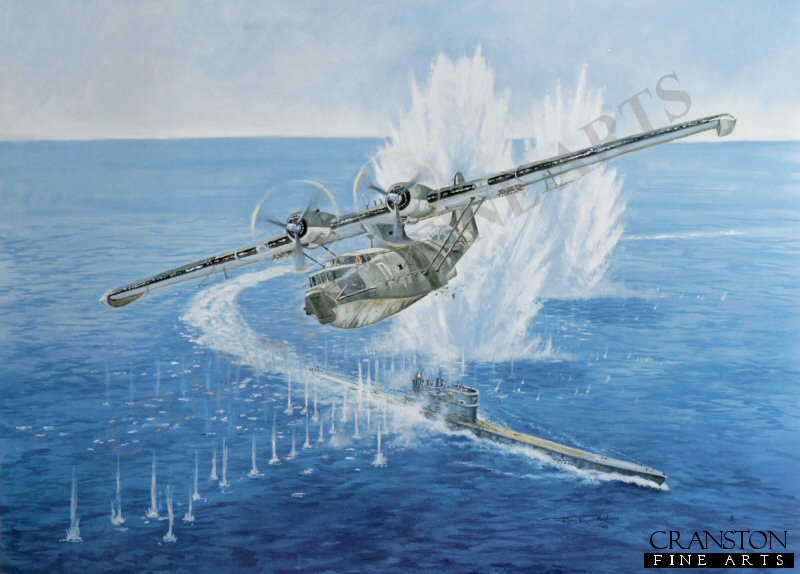
Joined the RAFVR in December 1940 and trained as a pilot-cadet with the US Navy at Pensacola, Florida. After further Coastal Command training in the UK, he joined 10 OTU (detachment) at St Eval, Cornwall. The tour was completed, as a Whitley co-pilot, on U-boat patrols over the Bay of Biscay, between December 1942 and March 1943. After training for command on the Catalina, he joined 210 Sqdn at Sullom Voe, Shetland from June 1943 to October 1944. In October 1943, with all landing areas closed with fog, his Catalina, out of fuel, ditched in the Atlantic, west of the Shetlands. It had remained airborne for 22 hours and then survived, on the water, for a further 18 hours before the crew were rescued. The pigeon which had carried the SOS message to base, later received the 'Dicken Medal' (Animal VC) for flying over 60 miles, in fog, in nine hours! In May 1944, U-boat 394 was attacked in northern waters, without success. On 18th July 1944, U-boat 742 was sunk 180 miles west of the Lofoten Islands, off Norway. The Catalina was badly holed but managed to return to base, 500 miles in six and a quarter hours, on the port engine. F/Lt John Cruickshank had sunk U-361 on the previous day, from the same Arctic U-boat Flotilla. F/Lt Vaughan instructed on Catalinas in Northern Ireland and was then posted to India, yo join Catalina 240 Sqdn in Madras, and then until VJ Day with Liberator Sqdn 357 in Ceylon. He left the RAF in 1946 having flown Halifax 7, at Linton and Cranwell. He joined BOAC and captained many types of aircraft for 29 years before retiring in 1975.
 |
| Distinguished Flying Cross |
| Flt. Lt. Ron Vaughan, DFC - Signed Naval Art Naval Crew Signatures |
|
|
|
|
|
|
| Text for the above items : |
Heading for the Convoys by Stephen Brown. RAF Catalinas of 210 Squadron over the West Coast of Scotland in 1944. The Consolidated Catalina PBY-5 proved invaluable to the RAF in its efforts to defend the vital convoys from the threat of enemy submarines, particularly during the Battle of the Atlantic. |
Catalina Attack by John Wynne Hopkins. D for Donald of 270 squadron, Royal Air Force, out of Freetown, West Africa operating in the Atlantic Ocean. It was during routine operation search that D for Donald surprised U515 on the surface and immediately attacked the submarine. U515 in putting up stiff resistance blew a large hole in the hull of D for Donald and the magazine of the starboard side 0.5 twin Browning was hit and the subsequent shrapnel wounded both blister gunners. U515 escaped but was sunk by an American naval hunter group a year later. D for Donald limped back to base and managed to make the beach before it would sink completely. |
Black Cat, Indian Ocean, 1944 by David Pentland. A Catalina flying boat of the Royal Air Force shown at anchor in the Indian Ocean at night. |
Clipped Signature - Ron Vaughan. Completed a tour on Whitleys on U-Boat patrols before commanding Catalina flying boats with No.210 Sqn from 1943 to 1944. Sunk U-742 off Norway and flew his badly damaged Catalina safely back to base. He was awarded the Distinguished Flying Cross and after the war joined BOAC until retirement in 1975. |
Catalina Crescendo by Ivan Berryman. No text for this item |
By Dawn's Light by Ivan Berryman. The Consolidated Model 28 PBY Catalina was so successful in its definitive form that it went on to become the most extensively built flying boat of all time. Here, a 210 Squadron Catalina Mk IVA from RAF Sullom Voe, Shetland, has located two weary downed aircrew, drained but grateful after a long night in the North Atlantic swell. |
|
Contact Details |
|
Sign Up To Our Newsletter!
This website is owned by Cranston Fine Arts. Torwood House, Torwoodhill Road, Rhu, Helensburgh, Scotland, G848LE Contact: Tel: (+44) (0) 1436 820269. Email: cranstonorders -at- outlook.com
|
 |