|
|
|
|
|
|
|
|
|
Group Captain Geoffrey Womersley DSO DFC Signed Naval Art
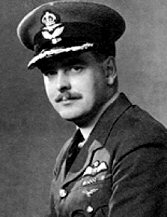
Group Captain Geoffrey Womersley DSO DFC
Geoffrey Harland Womersley was born on the 19th November 1914 at Bingley, Yorkshire. Geoffrey went to Bradford Grammar School and in 1936 joined the RAF and trained as a pilot at the RAFs flying school in Egypt. Geoffrey Harland Womersley joined No.102 Squadron flying biplane bombers. The squadron was re equipped with the Whitley bomber. Immediately after the outbreak of war he dropped propaganda leaflets over German cities and bombed the German seaplane bases on Heligoland and Sylt. On the night of May 11 1940, however, Womersley flew on the RAFs first raid on a German town, when 37 aircraft bombed road and rail links at Monchengladbach. The squadron supported the British Expeditionary Force and on 22nd May, his aircraft was hit by flak. Womersley and his crew were forced to bail out. On the ground he inadvertently stumbled into a group of German soldiers. Turning round and striding off in the other direction, he eventually came across some British soldiers. From there he managed to get to Paris and on to the last flight to England from Le Bourget airport. Womersley would go on to complete 30 operations, before becoming a bombing instructor. In August 1942 Womersley volunteered for the new Pathfinder squadrons, joining No 156, one of the Forces original four squadrons. In his Wellington he attacked targets in Germany and in Italy, dropping flares to illuminate the targets. In January 1943, whilst still a junior flight lieutenant, he was awarded a DSO. The citation concluded: He has displayed outstanding ability and pressed home his attacks with unusual courage in the face of enemy fighter and anti-aircraft opposition. 156 squadron was re-equipped with the Lancaster and Womersley went on to complete 25 operations during the Battle of the Ruhr. A few months after receiving his DSO he was awarded a DFC. In April 1943 he joined the air staff at Pathfinder headquarters, working directly for its commander, Air Vice-Marshal Donald Bennett. Ten months later he took command of No 139 Squadron. Womersley was promoted group captain to command the Pathfinder airfield at Gransden Lodge near Cambridge, and flew a number of operations with the resident RCAF Lancaster squadron. He left the RAF in November 1945. Donald Bennett in 1946 established British South American Airways, whose civilianised RAF bombers flew routes to the Caribbean and South America. Womersley along with many other Pathfinder Pilots joined the company. British South American Airways went on to use the Avro Tudor, one of which was lost without trace in the Bermuda Triangle. On May 10th 1954, following the British South American Airways merger with BOAC, Geoff Womersley would go onto to fly a Comet into Rome airport, where another crew took over for the flight to London. Disaster struck when soon after take-off the aircraft suffered an explosive decompression and crashed into the sea off Elba - there were no survivors. Geoffrey remained with the airline until 1968, retiring as one of its senior Boeing 707 captains. Geoff Womersley died on October 28th 2010.
 |  |
| Distinguished Service Order | Distinguished Flying Cross |
| Group Captain Geoffrey Womersley DSO DFC - Signed Naval Art Naval Crew Signatures |
|
|
| Text for the above items : |
Clipped Signature - Geoffrey Womersley. Flew biplanes then Whitley bombers with No.102 Sqn, bailing out while supporting the British Expeditionary Force but getting back to England. After 30 sorties he became an instructor before joining No.156 Pathfinder Sqn flying Wellingtons then Lancasters. Leaving the RAF in 1945 with a DFC and DSO, he became an airline pilot until retirement in 1968. He died in 2010. |
Winter Ops by Gerald Coulson. Up to 1942 Bomber Command operations were beset by many problems. The means they had to accurately pinpoint the target and assault it were totally lacking, in fact their Commander in Chief, Air Marshall Arthur Harris later wrote : It was glaringly obvious that the average crew in average weather could not find their way to the target. Between February and August 1942 an effort was made to rectify this through the development of a specialised target finding and target marking force, which became known as the Pathfinders. Activated on August 15 this new group was formed under the leadership of their AOC Air Commodore Don Bennett, himself a very experienced pre war pilot with exceptional navigational skills. The aircrews of No. 8 (PFF) Group were tasked with marking out the designated targets but the formation of this group was initially opposed by Harris. He felt that the ranks of his Main Force could be weakened if a high number of experienced and highly skilled crews were taken by this specialist unit, leading to a lessening of skills within the other bomber groups. He agreed however for an alternative scheme whereby complete units were assigned to the Pathfinder Force and the stage was then set for what was to become the Main Offensive of Bomber Command. The first four Squadrons - Nos. 7 (Stirlings) 35 (Halifax) 83 (Lancaster) and 156 (Wellingtons) - were based at a clutch of airfields between Cambridge and Huntingdon. In the absence of any specialist Target Markers the crews were initially forced to operate using standard flares and the early raids produced variable results, with cloud cover often proving the main obstacle in accurate marking. However during the winter of 1942 the introduction of the ground guided marking system, OBOE, marked a quantum leap in accurate target marking and by mid 1943 Pathfinder techniques had been developed for all forms of weather conditions, including nights when complete overcast existed.Pathfinder crews used a combination of personal skill and technical equipment such as H2S to locate their targets. Often flying against overwhelming odds and in appalling conditions they transformed the performance of a bomber force that in 1941 was dropping almost half its bombs on open countryside. This third and final painting in Gerald Coulsons Tribute to Bomber Command depicts Lancaster Bombers of No.8 (PFF) Group returning late after a gruelling operation over Berlin. It is Christmas 1943 and the winter landscape reflects the early morning sunrise as the weary crews approach the safety of their Cambridgeshire base. |
|
Contact Details |
|
Sign Up To Our Newsletter!
This website is owned by Cranston Fine Arts. Torwood House, Torwoodhill Road, Rhu, Helensburgh, Scotland, G848LE Contact: Tel: (+44) (0) 1436 820269. Email: cranstonorders -at- outlook.com
|
 |




