|
|
|
|
|
|
|
|
|
Wing Commander Jim Wright DFC Signed Naval Art
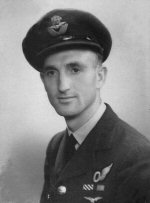
Wing Commander Jim Wright DFC
Upon completing his training in 1943 Jim Wright joined 61 Sqn at Syerston as a Navigator on Lancasters and served in the crew of Flight Lieutenant Ken Ames DFC and Bar. After completing 5 operations with 61 Sqn, F/L Ames and crew were posted to East Kirkby to join the newly formed 630 Squadron. After a brief spell in hospital, after a trip to Kassel on the 22 October 1943 and after completing 22 operations with 630 Squadron, Jim Wright joined 97 (Pathfinder) Squadron at Coningsby for the commencement of their 2nd tour. Jim and the crew completed 16 operations with 97 squadron with their last operation was on the 19th of September 1944. In January 1944 they completed trips to Stettin, Brunswick, Magdeburg and 4 to Berlin. Their next trip to Berlin was on 15th February 1944 followed by operations to Leipzig, Stuttgart and Augsburg. In March they went to Stuttgart, Charmand-Ferront, Stuttgart, Frankfurt and Nuremburg. In April to Toulouse, Pillau Canal (Konigsberg), Tours and Juvisy. In May, to finish their first tour, they went to Bourg. Following completion of operational duties with 97 Squadron Jim Wright was seconded to BOAC and served as an Operations Officer at Hurn and Heathrow in1945 until being demobed in October 1946. Then Jim worked for BOAC 1946 until December 1950 as an Air Traffic Control Officer (ATCO) in British West Africa (Yundum & Half Die, Gambia) and as a Flight Operations Officer at Prestwick and Heathrow before rejoining the RAF 1951 for ATCO duties until he retired in 1976. He died on 2nd June 2019.
 |
| Distinguished Flying Cross |
| Wing Commander Jim Wright DFC - Signed Naval Art Naval Crew Signatures |
|
|
|
|
|
|
| Text for the above items : |
The Shining Sword by Simon Smith. RAF Avro Lancaster flies low over occupied Europe. |
Teamwork by Ivan Berryman. The afternoon of 3rd August 1944 saw Lancasters of 15 Sqn assigned to an attack on German V-1 Rocket stores at Bois de Cassan. While over the target the squadron encountered heavy flak. During the return journey, Lancaster LS-P fell behind the rest of the squadron but luckily for the crew, two P-38 Lightnings who had been involved in fighter sweeps, spotted the straggling Lancaster and escorted it back to base at Mildenhall. |
A Welcome Sight by Richard Taylor. A peaceful corner of eastern England is temporarily awakened from its summer slumbers by the thunder of Merlin engines, the familiar roar announcing the safe return of a squadron of Lancasters from their latest operation. With wheels already down, the pilots throttle back the huge engines as the heavies make their final approach to the airfield nearby. Below them quiet will soon return to the countryside and on base, after debrief, the weary bomber crews will take a well-earned rest. They don't expect it to last long - they could be flying again tonight. |
Winter Ops by Gerald Coulson. Up to 1942 Bomber Command operations were beset by many problems. The means they had to accurately pinpoint the target and assault it were totally lacking, in fact their Commander in Chief, Air Marshall Arthur Harris later wrote : It was glaringly obvious that the average crew in average weather could not find their way to the target. Between February and August 1942 an effort was made to rectify this through the development of a specialised target finding and target marking force, which became known as the Pathfinders. Activated on August 15 this new group was formed under the leadership of their AOC Air Commodore Don Bennett, himself a very experienced pre war pilot with exceptional navigational skills. The aircrews of No. 8 (PFF) Group were tasked with marking out the designated targets but the formation of this group was initially opposed by Harris. He felt that the ranks of his Main Force could be weakened if a high number of experienced and highly skilled crews were taken by this specialist unit, leading to a lessening of skills within the other bomber groups. He agreed however for an alternative scheme whereby complete units were assigned to the Pathfinder Force and the stage was then set for what was to become the Main Offensive of Bomber Command. The first four Squadrons - Nos. 7 (Stirlings) 35 (Halifax) 83 (Lancaster) and 156 (Wellingtons) - were based at a clutch of airfields between Cambridge and Huntingdon. In the absence of any specialist Target Markers the crews were initially forced to operate using standard flares and the early raids produced variable results, with cloud cover often proving the main obstacle in accurate marking. However during the winter of 1942 the introduction of the ground guided marking system, OBOE, marked a quantum leap in accurate target marking and by mid 1943 Pathfinder techniques had been developed for all forms of weather conditions, including nights when complete overcast existed.Pathfinder crews used a combination of personal skill and technical equipment such as H2S to locate their targets. Often flying against overwhelming odds and in appalling conditions they transformed the performance of a bomber force that in 1941 was dropping almost half its bombs on open countryside. This third and final painting in Gerald Coulsons Tribute to Bomber Command depicts Lancaster Bombers of No.8 (PFF) Group returning late after a gruelling operation over Berlin. It is Christmas 1943 and the winter landscape reflects the early morning sunrise as the weary crews approach the safety of their Cambridgeshire base. |
Last One Away by Ivan Berryman. A Lancaster of No.15 Squadron takes to the air at the start of a night sortie from Mildenhall in June 1944. |
Clipped Signature - Jim Wright. Flew a tour as a Navigator on Lancasters with 61 and 630 Squadron before joining 97 Pathfinder Squadron for a second tour. He died in 2019. |
|
Contact Details |
|
Sign Up To Our Newsletter!
This website is owned by Cranston Fine Arts. Torwood House, Torwoodhill Road, Rhu, Helensburgh, Scotland, G848LE Contact: Tel: (+44) (0) 1436 820269. Email: cranstonorders -at- outlook.com
|
 |




